Evergreens are meant to stay green year-round, so when they start to look brown, dull, or stressed in winter, many New Jersey homeowners understandably worry. Is the plant dying—or is this normal for the season?
At Rich Green Lawns, we often get questions about the difference between winter burn and normal dormancy in evergreens. Understanding what’s happening helps you know when to relax—and when action is needed. It also explains why our early-winter protection treatments and spring deep root care play such an important role in keeping landscapes healthy.
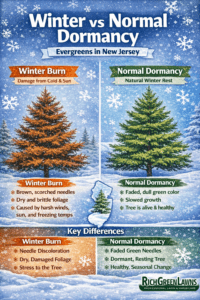
What Is Normal Dormancy in Evergreens? Dormancy is a natural survival response to cold weather. While evergreen plants keep their needles or leaves year-round, their growth slows dramatically during winter.
Signs of Normal Dormancy
-Slight dulling or bronzing of needles, especially on arborvitae, boxwood, and certain junipers
-Uniform color change throughout the plant
-No needle drop or brittle foliage
-Healthy green color returns in spring as temperatures rise
In New Jersey, fluctuating winter temperatures and shorter daylight hours commonly trigger dormancy. This process is temporary and does not harm the plant.
What Is Winter Burn? Winter burn is a form of environmental stress damage, not dormancy. It occurs when evergreens lose moisture faster than they can replace it—most often during cold, windy, or sunny winter days when the ground is frozen.
Common Causes of Winter Burn in NJ
-Dry winter winds
-Bright winter sun reflecting off snow and pavement
-Frozen soil preventing water uptake
-De-icing salt exposure
-Lack of fall or early-winter protection
Signs of Winter Burn
-Browning or yellowing at the tips or outer edges of branches
-Damage concentrated on one side of the plant (often windward or sun-facing)
-Brittle, dry needles or leaves
-Browning that does not improve as spring approaches
Unlike dormancy, winter burn can cause lasting damage if left untreated.
Key Differences: Dormancy vs. Winter Burn
Dormancy Winter Burn
Natural seasonal response Environmental damage
Even color change Patchy or directional browning
Plant remains flexible Foliage becomes dry and brittle
Color improves in spring Damage often worsens without treatment
How Rich Green Lawns Helps Prevent Winter Burn:
Prevention is the best defense against winter burn—especially in New Jersey’s unpredictable winters.
🌲Winter Protection
Each year in early winter, Rich Green Lawns applies professional winter protection treatments to vulnerable evergreens.
These treatments:
Reduce moisture loss from needles and leaves
Protect plants from drying winds and sun exposure
Strengthen plants before harsh weather sets in
Improve overall winter survival
This proactive step significantly lowers the risk of winter burn before damage starts.
Treating Winter Burn in Spring: Deep Root Care
If winter burn does occur, timely spring care is essential.
🌱 Spring Deep Root Fertilization:
Our spring deep root treatments are designed to:
Rehydrate stressed root systems
Deliver nutrients directly to the root zone
Encourage healthy new growth
Help plants recover faster and fuller
Deep root feeding supports long-term plant health and helps evergreens rebound from winter stress more effectively than surface applications alone.
When to Call the experts at Rich Green Lawns:
✔ If your evergreens show significant browning, thinning, or uneven damage in late winter or early spring, it’s time for an expert evaluation. Dormancy should resolve naturally—but winter burn needs professional attention to prevent permanent decline.
✔ At Rich Green Lawns, we tailor evergreen care to New Jersey’s climate, soil conditions, and seasonal challenges.
Healthy evergreens don’t happen by accident—they’re the result of proper seasonal care.
Contact Rich Green Lawns today to learn more about our evergreen protection and recovery programs and keep your landscape looking its best in every season.